Recycling and Sustainability at Removals Uk
 At Removals Uk, recycling and sustainability are built into the way every move is planned and completed. A modern removals company should do more than transport boxes; it should help reduce waste, support reuse, and make responsible choices at each stage of the journey. That is why our recycling-first approach aims to keep as much material as possible away from landfill and in productive use through careful sorting, recovery, and donation.
We work toward a recycling percentage target of 90% across suitable non-hazardous materials from our operations, including cardboard, paper, plastics, metals, wood, and other recoverable items. This target reflects a commitment to practical circularity rather than simple disposal. In everyday terms, it means more packing waste is separated for recycling, more surplus items are rehomed, and more vehicle journeys are planned to reduce carbon output.
Our removals and recycling process begins with separation at source. Where borough collections and local regulations allow, we keep dry mixed recyclables distinct from general waste, making it easier for downstream processors to recover materials efficiently. In many areas, that means following local council rules on paper, card, glass, plastics, and metals, while also paying attention to the specific waste-separation expectations seen across different boroughs. This localised approach supports cleaner recycling streams and fewer contamination issues.
 A key part of our sustainability model is the use of local transfer stations. By routing materials through nearby facilities rather than long-distance disposal points, we help reduce transport emissions and improve operational efficiency. These transfer stations also give us better control over sorting and grading, which is especially useful when handling a mix of move-related waste such as broken shelving, old furniture components, stretch wrap, and surplus packing materials.
We also maintain partnerships with charities that help extend the life of usable goods. Furniture, homeware, books, and other re-usable items may be directed to charitable partners when they are in good enough condition for a second home. This donation pathway is an important part of our sustainable removals strategy because it preserves value, supports local communities, and reduces the volume of items entering the waste system. Where possible, items are assessed for reuse before any recycling or disposal route is considered.
 The middle of our process is where resource recovery becomes most visible. During a house removal recycling operation, we separate materials such as flat-packed furniture, old fixtures, wiring offcuts, cardboard boxes, and protective paper. Boroughs with more structured household waste separation often influence how we prepare loads for onward processing; for example, clear segregation of garden waste, mixed dry recycling, and residual waste can help ensure better recovery rates. Our teams are trained to respect these local differences and align collections with the facilities best suited to each material type.
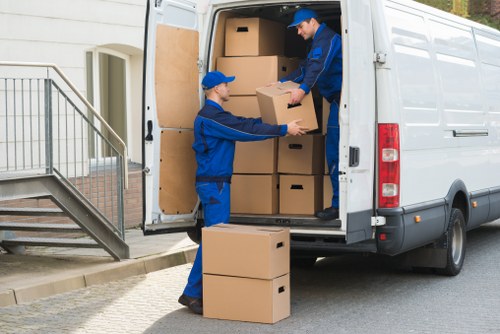
We are equally focused on cleaner transport. Our fleet includes low-carbon vans designed to reduce emissions while remaining efficient for urban and regional moves. These vans support our broader goal of a low-impact removals service by using less fuel and producing fewer emissions on short, stop-start journeys typical of city work. When combined with route optimisation and well-planned loading, they allow us to reduce unnecessary mileage and cut wasteful back-and-forth trips.
In practical terms, sustainability also depends on how teams handle packaging materials at the point of removal. Reusable crates, recycled cardboard, and responsibly sourced protective materials are preferred whenever suitable. Plastic wrap and tape are used only where necessary, and we aim to recover or separate those materials after the move. For many clients, the simple act of keeping cardboard clean and dry before collection can significantly improve recycling outcomes. This small step, repeated across many jobs, has a large cumulative effect.
Our commitment extends to responsible decision-making for items that cannot be reused. If an item is unsuitable for donation, we look for the most appropriate recycling route before considering disposal. Wood may be diverted for recovery, metals can be reprocessed, and certain plastics can enter specialist recycling channels depending on local infrastructure. This layered approach ensures our recycling service supports both environmental performance and compliance with local waste handling expectations.
 Across London and surrounding areas, the specific borough approach to waste separation shapes how we operate. Some boroughs place strong emphasis on segregating paper and card, while others prioritise food waste capture or mixed dry recycling collection standards. Our teams stay mindful of these local rules so that recyclable loads are prepared properly for the correct facility. That attention to detail improves the quality of recycled material and helps avoid contamination that can reduce recovery rates.
We also recognise that sustainability is not only about recycling more; it is about reducing the need for waste in the first place. That is why we encourage a careful review of what is genuinely needed for a move, what can be reused, and what should be responsibly recycled. By combining efficient logistics, local transfer stations, charity partnerships, and low-carbon vans, Removals Uk recycling efforts are designed to support a cleaner, more resource-conscious moving experience.
 Looking ahead, our aim is to keep improving the balance between reuse, recycling, and lower-emission transport. Every route, every load, and every material stream is an opportunity to make a better environmental choice. Through sustainable removals UK practices, a strong recycling percentage target, and close attention to local borough waste separation standards, we are working to make each move more responsible than the last.